
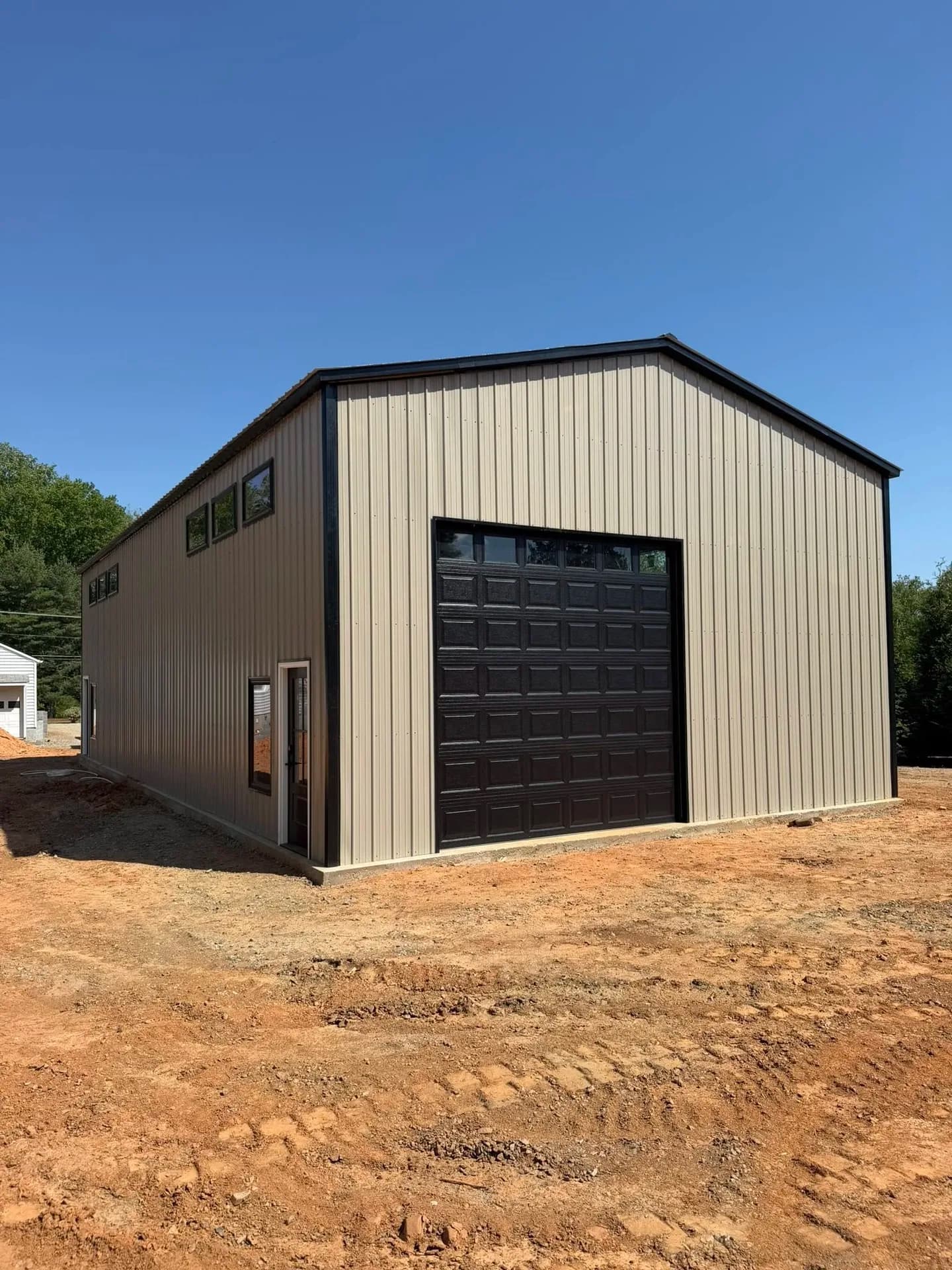
"Do I actually need a permit for this?" is close to the first question every pole barn buyer asks us, and it's one of the most-searched questions in this entire industry. The honest answer isn't a single yes or no. It depends on your township, the size of what you're building, and how you're planning to use it. Here's what we can tell you in general, and where the answer genuinely changes property to property.
Why There's No One Answer For "Monroe County"
Pennsylvania's building code (the Uniform Construction Code, or UCC for short) sets statewide standards, but enforcement and specific requirements get applied at the township level. Monroe County isn't one zoning authority; it's dozens of townships and boroughs, each with its own zoning ordinance layered on top of the state code. What's exempt in one township can require a full permit in the next one over. This is the single biggest source of confusion in pole barn permitting anywhere in Pennsylvania, not just here.
The Two Permits People Confuse
Zoning permit. This is the "is this allowed on my property at all" check. It covers things like how far your building has to sit from your property lines (setbacks), whether your land's zoning classification allows the structure you're planning, and any restrictions specific to your township. This usually needs to be resolved before construction is even discussed.
Building permit. This is the "how it's built" check, issued under the state's UCC. It covers structural requirements and construction-phase inspections. When people ask "do I need a permit for a pole barn," this is usually what they mean, but you may need the zoning permit too, or instead, depending on your project.
Some townships handle these as one combined process. Others require both separately. Ask your specific township which applies to you.
The 1,000-Square-Foot Question
A lot of online sources will tell you that detached residential accessory structures under 1,000 square feet are exempt from a UCC building permit in Pennsylvania. That's a real provision that exists in parts of the code, but it's not a blanket rule you should assume applies to your project. The exact threshold, what counts as a qualifying "accessory structure," and whether your township has added its own amendments on top of the state code all vary. We've seen buyers assume they're exempt and find out otherwise partway through planning. Confirm the actual threshold with your township's code enforcement office before you count on it.
And even if a building qualifies for the UCC exemption, that doesn't automatically mean you're exempt from a local zoning permit. Those are two separate approvals, and a building can be exempt from one and still need the other.
What Definitely Requires A Full Permit
- Commercial buildings. The smaller-structure exemption is aimed at simple residential accessory buildings, not commercial use, regardless of size.
- Any structure with living space. A barndominium, or any building where you're adding plumbing, bedrooms, or residential occupancy, triggers full residential code (structural, egress, and energy requirements) on top of whatever septic and zoning review your township requires for adding a residence.
- Larger structures generally, once you're above whatever your specific township's accessory-structure threshold is.
What Your Township Will Likely Check
- Setbacks from your property lines, often different requirements for front, side, and rear.
- Height and coverage limits, which can differ by zoning district within the same township.
- A site plan showing exactly where the building sits relative to your property lines and any existing structures.
- Proximity to septic systems or wells, especially relevant if you're adding plumbing or living space.
Inspections During Construction
If your project requires a building permit, expect check-ins during construction, commonly at the foundation/footing stage and again at final completion before you get sign-off. Some townships contract this out to a third-party UCC inspection agency rather than handling it in-house. The exact schedule and who performs it depends on your specific municipality.
Site Work And Permits On Poconos Terrain
One thing that catches people off guard here specifically: the Poconos' hilly, rocky terrain sometimes triggers its own review around grading and site disturbance, separate from the building permit itself, depending on the scope of your site work and your township's ordinance. If your lot has real slope or ledge rock, it's worth asking your township's code office about this alongside your building permit application, not after you've already started moving dirt.
What A Barndominium Adds To This Conversation
If your plan involves living quarters — not just a shop or storage building — you're looking at a meaningfully bigger permitting process. Full residential code applies, which means structural review beyond a basic pole barn, egress requirements (how people safely exit in an emergency), energy code compliance, and likely a septic capacity review if you don't already have a system sized for the additional occupancy. This is worth raising with your township early in the planning process, well before you're committed to a floor plan.
What Permits Actually Cost
Permit fees themselves are generally modest compared to the overall project, though the exact fee varies quite a bit by municipality and project scope — ask your township for its current fee schedule. It's not typically the expensive part of the process; it's the requirement-gathering that takes the real time.
Our Honest Recommendation
Before you get too far into planning — before you've picked a builder, before you've settled on a size — call your township's zoning or code enforcement office directly. It costs nothing, and it's the only way to get an answer that's specific to your actual property instead of a general guide like this one. Ask them directly: do I need a zoning permit, do I need a UCC building permit, and does anything about my specific parcel (septic, well, prior variances) change the answer.
We help every customer figure out this process as part of working with us — not because we're permit experts by trade, but because we're based right here in Monroe County and know which questions to ask. If you're not sure where to start, tell us about your project and we'll help point you in the right direction.