
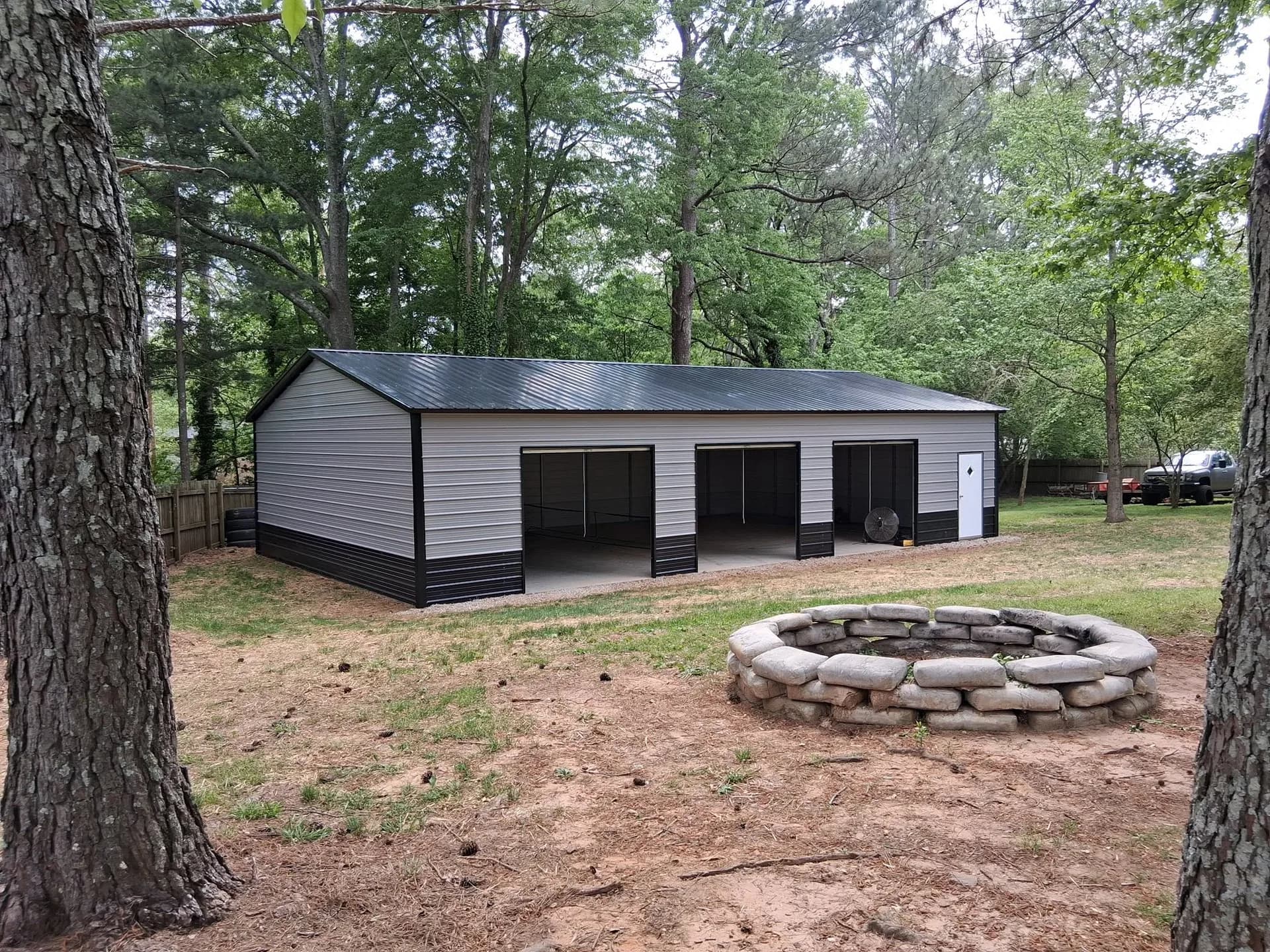
A 30x40 pole barn (1,200 square feet) is one of the most common sizes people ask us about. It's big enough for real equipment storage, a solid workshop, or a multi-vehicle garage, and small enough that it's usually the first "real building" someone puts on a property. So here's the honest answer on what one actually costs, without a "starting at" number that doesn't hold up once you get into it.
The Market Range For Pennsylvania
Published Pennsylvania cost data puts a building this size somewhere in the range of $16,800 to $54,000 total, depending heavily on site conditions, foundation choice, and how finished the interior is. Statewide, the average pole barn project overall runs around $26,000, with a general range of $15 to $45 per square foot.
That's a wide range on purpose. A bare shell with a dirt floor and no electrical is a completely different project from a fully insulated, wired, concrete-floored shop of the same footprint. Both are the same 1,200 square feet. They cost very different amounts.
We want to be clear about something up front: these numbers come from published Pennsylvania market data, not from us, and they span the market broadly, both wood post-frame and all-steel builds. We build the steel version only, zero wood in the frame, so ask us for a number tied to that build once you've seen the range. Your actual price depends on your site, and we'll only give you a real one after we've walked your property.
Why The Same Size Building Can Cost So Differently
Foundation choice
Posts set directly in the ground with concrete footings cost less upfront than a full poured concrete slab. Whether that fits your project depends on how you're planning to use the space: a workshop where you'll be rolling tool carts around wants a slab, while a straight equipment shed might not need one.
Site conditions
This is the one people underestimate the most, especially up here. A flat, already-cleared lot in the Poconos preps very differently than one with real slope, rock, or trees to deal with. Site work can move your total more than almost any other single line item, and it's specific to your property. Nobody can quote it accurately without seeing your lot.
Electrical and insulation
A bare shell with one overhead door is the cheapest version of a building this size. Add wiring for lights and outlets, insulation for comfort, and you're adding real cost. Worth it if you're planning to actually work in the space through a Poconos winter, less necessary if it's pure storage.
Doors
One standard overhead door is usually part of a base quote. Additional doors, oversized doors for bigger equipment, or a walk-in door alongside the overhead all add cost.
Trim and finish
Wainscot (that lower band of accent trim you see on a lot of finished buildings) and other exterior upgrades are common add-ons that change the total without changing the footprint.
What's Typically Included In A Base Quote At This Size
- Steel-tube posts and trusses
- Roof and wall panels
- One standard overhead door
What Usually Costs Extra
- Concrete slab or flooring
- Insulation
- Electrical service and wiring
- Additional or upgraded doors and windows
- Wainscot or other trim upgrades
- Interior finish-out, if you're planning to use the space as a shop
This split is the single biggest reason people get surprised by pole barn pricing industry-wide. A "starting at $16,800" ad is technically accurate for the bare-shell version of that same footprint, and completely misleading if what you actually pictured was a wired, insulated, concrete-floored shop. Ask any builder, us included, to walk you through exactly what's in a quote before you compare it to anyone else's number.
Turnkey vs. Kit: Which Is Actually Cheaper At This Size?
At this footprint, a lot of buyers consider a DIY kit to save money. It's worth running the real math before assuming that saves you anything. A kit price doesn't include your own labor, or the coordination cost of lining up a concrete sub and an electrician on your own schedule. If anything goes wrong mid-assembly, you're the one troubleshooting it instead of a crew that's done it before. Once you price your own time and the risk of coordination mistakes fairly, a turnkey quote at this size is frequently competitive with a full kit build, and sometimes comes in lower.
Why We Don't Quote A Flat Number Online
Every one of the pricing sites and cost calculators you'll find gives you a range instead of a real number, because your site, your foundation choice, and your finish level all move the total more than the size of the building does. We could put a "starting at $X" figure on this page like a lot of competitors do. It wouldn't be an honest number for your specific building, though, just the low end of the range dressed up to look like a quote.
What we'll actually do is walk your property, ask what you're planning to use the space for, and give you a real, itemized number broken down by category: foundation, structure, doors, electrical, finish. So you know exactly what you're paying for and why.
The Bottom Line
A 1,200-square-foot pole barn in Pennsylvania can reasonably run anywhere from roughly $17,000 to $54,000 depending on foundation, site conditions, and finish level. If someone quotes you a flat number without seeing your property, ask what's actually included — that's usually where the real story is.
Ready to get an honest number for your own project? Tell us your site and what you're planning to build, and we'll walk you through it category by category, no surprises at the end.